
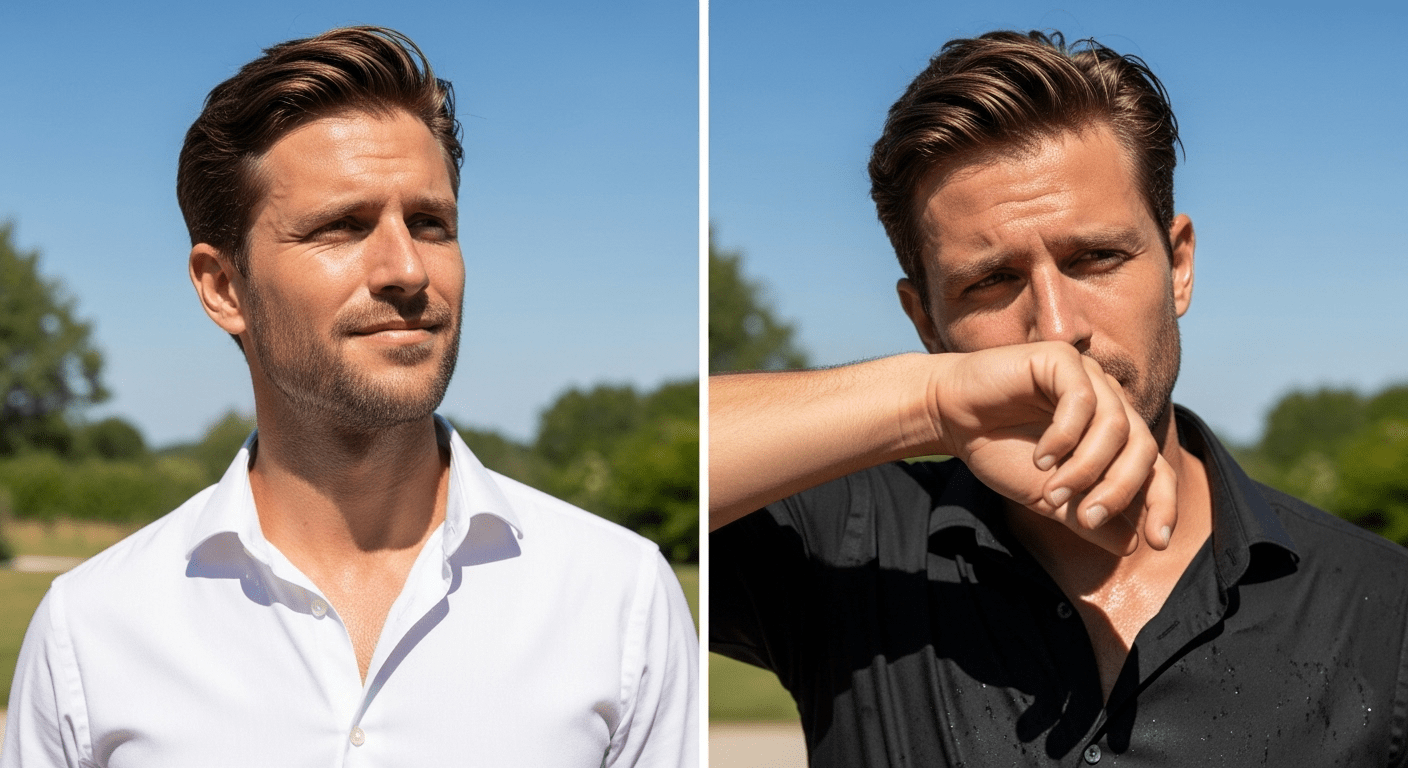
We’ve all been there—you throw on a black t-shirt or dark jeans on a sunny day, and within minutes you’re already feeling sticky and overheated. It’s not just in your head—dark colors really do make you sweat more. But why does this happen, and does that mean you have to give up your favorite black outfits in the summer? The good news: not necessarily. With the right fabrics, fits, and a few smart tricks, you can still wear what you love without melting in the heat.
1. The Sunlight Reality Check: Dark Colors = More Heat
- Dark clothes, like black or deep navy, absorb most of the sunlight—these colors soak up visible and infrared light and convert it into heat. That means the fabric heats up quickly and presses that warmth right onto your skin. One experiment found that a black shirt got a whopping 60°F hotter than a white one in just five minutes.
- Scientific studies confirm dark-colored clothing reduces your body’s ability to lose heat—even by a few percent—making you sweat more.
| 😓 Facing This Problem? | ✅ Best Products from Amazon |
|---|---|
| Dark patches under arms? | Best Shirts That Hide Sweat |
| Excessive sweating? | Strongest Antiperspirants That Work |
| Sweat in formal meetings? | Breathable Formal Wear |
| Always sweating in summer? | Cooling Clothing You’ll Love |
| Shoes getting smelly? | Sweat-Resistant Shoes |
| Visible back sweat? | Undershirts That Actually Work |
2. But There Are Exceptions (Looking at You, Bedouins)
In some desert cultures, loose‑fitting black garments work surprisingly well. The “chimney effect” helps heat rise away from the body—if air can circulate between the clothes and skin.
3. Want to Hide Sweat Stains? Light vs. Dark Is About More Than Heat
- Dark colors like black, navy, and charcoal gray are great at hiding sweat marks, especially in casual or formal outfits.
- Light colors, especially white, reflect sunlight and help keep you cooler—still, they’re not always best for concealing sweat.
- Patterns—stripes, checks, florals—can magically disguise damp spots and are often a better sweat camo than solid colors.
- Avoid heathered gray in extreme heat—it turns dark when wet and makes sweat obvious.
4. Materials & Fit Matter Big Time
- Choose natural, breathable fibers like cotton, linen, or lightweight chambray—they let air flow and help sweat evaporate.
- Skip thick denim, polyester, or silk on hot days—they trap heat and sweat, and synthetics often hold smell and microplastics.
- Loose fit beats tight clothing almost every time. Tight clothes trap hot air and sweat; a bit of drape encourages cooling.
5. Smart Combinations: Style + Comfort
Here’s a simple decision tree to help you choose what to wear when it’s hot:
| Your Goal | Go for These Options |
|---|---|
| Stay cool in heat | White or pastel colors, breathable natural fabrics |
| Hide sweat easily | Solid dark colors (black, navy, charcoal) |
| Balance both | Light-colored patterned fabrics |
| Wear dark without overheating | Choose breathable, loose-fit cotton or linen |
6. Sweat-Tested Pro Tip: Light Base Layer (Optional)
If you love dark colors but want to stay cool and sweat‑free, wear a light-colored or moisture-wicking undershirt—this layer absorbs sweat and keeps your outer layer looking fresh longer.
7. Bonus Hacks for Staying Fresh (and Stylish)
- Wear a wide-brimmed hat for shade, or open-toed shoes for airflow.
- Change out of damp clothes quickly—lingering sweat can irritate skin and cause rashes or breakouts.
At the end of the day, it’s not about avoiding dark clothes forever—it’s about knowing how and when to wear them. If you love your black tees or navy shirts, pair them with light, breathable fabrics and looser fits so you don’t overheat. And when the sun is blazing, lighter shades or patterned outfits can keep you cooler and still stylish. Think of it less as a restriction and more as a style hack: once you understand how color affects sweat and comfort, you’ll always know what to reach for in your closet before stepping out.