
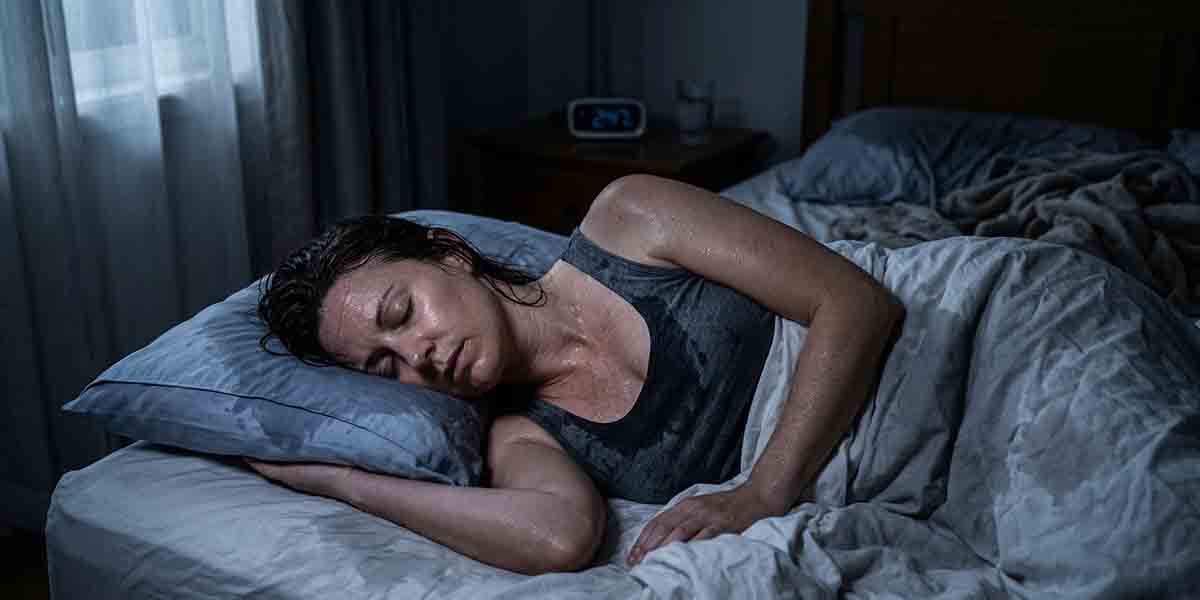
Waking up in the middle of the night drenched in sweat, despite sleeping in a reasonably cool room, is one of those experiences that feels deeply unsettling the first time it happens.
The sheets are soaked, your pajamas cling to your skin, and you find yourself staring at the ceiling wondering what on earth is going on with your body. If this sounds familiar, you are far from alone.
Night sweats, as they are clinically known, affect a surprisingly large portion of the adult population. Studies suggest that somewhere between ten and forty percent of people experience them at some point in their lives, yet many never bring it up with a doctor because they assume it is just “how they sleep.” That assumption is worth reconsidering. While occasional nighttime warmth is perfectly normal, true night sweats that soak through bedding and disrupt sleep on a regular basis often have an underlying cause worth identifying.
This article walks through what night sweating actually is, why it happens, the wide range of conditions and lifestyle factors that can trigger it, and what you can realistically do to reduce or eliminate it.
What Are Night Sweats, Really?
It is worth drawing a clear line between feeling warm in bed and experiencing genuine night sweats. If your bedroom is too hot, your blanket is too heavy, or you went to bed after a particularly intense workout, sweating is simply your body doing its job — regulating temperature through perspiration.
True night sweats are different. They occur even when the sleeping environment is comfortable, they tend to be disproportionately intense relative to the room conditions, and they happen repeatedly. In medical literature, the term refers specifically to episodes of excessive sweating during sleep that are not explained by an overly warm environment. The sweating can be severe enough that a person needs to change their clothes or their sheets in the middle of the night.
The underlying mechanism is tied to the body’s thermoregulatory system — the internal processes that keep your core temperature within a narrow, healthy range. When this system misfires, either because of hormonal signals, medications, an immune response, or various other triggers, it can activate sweating inappropriately during sleep.
| 😓 Facing This Problem? | ✅ Best Products from Amazon |
|---|---|
| Dark patches under arms? | Best Shirts That Hide Sweat |
| Excessive sweating? | Strongest Antiperspirants That Work |
| Sweat in formal meetings? | Breathable Formal Wear |
| Always sweating in summer? | Cooling Clothing You’ll Love |
| Shoes getting smelly? | Sweat-Resistant Shoes |
| Visible back sweat? | Undershirts That Actually Work |
Common Causes of Night Sweating
Night sweats are not a diagnosis in themselves — they are a symptom. The list of possible causes is longer than most people expect, which is part of why they can be tricky to pin down without a thorough evaluation.
1. Hormonal Changes and Imbalances
This is one of the most frequently cited causes, particularly in women. Menopause and perimenopause — the years leading up to the final menstrual period — involve a gradual decline in estrogen. Estrogen plays a role in regulating the hypothalamus, the part of the brain that acts as the body’s internal thermostat. When estrogen fluctuates or drops, the hypothalamus can become hypersensitive to very small changes in body temperature, triggering sudden surges of heat and sweating even when no actual overheating has occurred. These episodes, commonly called hot flashes when they happen during the day, become night sweats when they strike during sleep.
Men are not immune. Testosterone levels decline with age, and low testosterone — sometimes called andropause, though the term is somewhat contested in medical circles — can also cause sweating episodes at night. Men undergoing hormonal therapy for prostate cancer, which deliberately suppresses testosterone, frequently report significant night sweats as a side effect.
Thyroid disorders are another hormonal culprit. An overactive thyroid, or hyperthyroidism, accelerates the body’s metabolic rate across the board, generating excess heat. People with this condition often feel warm, sweaty, and restless both day and night.
2. Infections
Night sweats have long been associated with certain infections, particularly those that produce a prolonged or fluctuating fever. Historically, tuberculosis was so commonly associated with night sweats that the symptom was nicknamed “consumption sweats.” While TB is less prevalent in many parts of the world today, it remains a consideration, especially in people who have traveled internationally or spent time in close quarters with infected individuals.
HIV infection, particularly in its earlier stages before treatment, can cause persistent night sweats. Bacterial endocarditis (an infection of the heart’s inner lining), osteomyelitis (bone infection), and abscesses — whether visible or internal — are other infectious causes that physicians consider when evaluating this symptom. In these cases, night sweats often come alongside other signs of infection such as fever, chills, fatigue, and unexplained weight loss.
3. Medications
A remarkably wide range of medications list night sweats as a potential side effect, and people are often surprised to discover that something they have been taking for years could be behind their symptoms.
Common pharmaceutical contributors include:
- Antidepressants, especially SSRIs and SNRIs — these are among the most frequently reported medication-related causes of night sweats
- Antipyretics like aspirin and acetaminophen, which affect the body’s temperature-regulating signals when taken close to bedtime
- Corticosteroids such as prednisone, which influence hormonal balance
- Diabetes medications, particularly those that can cause blood sugar to dip too low overnight
- Hormonal treatments including tamoxifen and aromatase inhibitors, commonly used in breast cancer management
- Opioids and certain blood pressure medications
If your night sweats began around the same time you started a new medication, or after a dosage change, that connection is worth discussing with your prescribing physician. Never stop a medication without guidance, but the timing may be an important clue.
4. Obstructive Sleep Apnea
Sleep apnea is a condition in which the upper airway repeatedly collapses during sleep, causing brief pauses in breathing that can occur dozens or even hundreds of times per night. Each episode triggers a surge of stress hormones as the brain jolts the body back into breathing. This repeated activation of the sympathetic nervous system — the fight-or-flight response — generates heat and can produce significant sweating. The connection between sleep apnea and night sweats is well-documented, and it is worth noting that many people with sleep apnea are unaware they have it because the episodes happen while they are asleep.
Loud snoring, waking with a headache, feeling unrested after a full night’s sleep, and daytime drowsiness are other signs that sleep apnea may be a factor.
5. Anxiety and Stress
The mind and body are more tightly coupled during sleep than many people realize. Anxiety disorders, chronic stress, and even the accumulated tension of a difficult period in life can keep the nervous system in a state of low-level activation even during sleep. The sympathetic nervous system, when chronically stimulated, raises core body temperature and promotes sweating as part of its arousal response.
People who experience anxiety-related night sweats often also notice racing thoughts at bedtime, difficulty falling or staying asleep, and a general sense of being unable to fully relax even when they feel physically tired. Nightmares and vivid dreams — both associated with hyperactivated stress responses — can trigger intense sweating as well.
6. Hypoglycemia (Low Blood Sugar)
Blood sugar levels naturally dip slightly during sleep, but in people with diabetes — particularly those using insulin or certain oral medications — they can fall low enough to trigger a hypoglycemic response overnight. When blood sugar drops too far, the body releases adrenaline and other counterregulatory hormones to stimulate the liver to release stored glucose. This hormonal surge produces sweating, heart palpitations, and sometimes restlessness or nightmares.
Non-diabetics can also experience reactive hypoglycemia, particularly if they consumed a large amount of sugar or alcohol in the hours before bed.
7. Neurological Conditions
The autonomic nervous system — which governs involuntary body functions including sweating — can be disrupted by various neurological conditions. Parkinson’s disease, for instance, is associated with autonomic dysfunction that includes excessive sweating. Stroke, syringomyelia (a fluid-filled cyst within the spinal cord), and autonomic neuropathy (nerve damage affecting involuntary functions) can all interfere with normal temperature regulation.
8. Cancers and Blood Disorders
Night sweats appear as a symptom of several malignancies, most notably lymphoma — cancer of the lymphatic system. They are part of what oncologists call “B symptoms,” a set of constitutional signs that include unexplained fever and unintentional weight loss. Leukemia and other blood cancers can also produce night sweats, typically as the immune system mounts a response to abnormal cell activity.
It is important to note that while cancer-related night sweats are real, they represent a relatively small proportion of all night sweat cases. Most people with night sweats do not have cancer. However, if sweating is accompanied by unexplained weight loss, persistent fever, swollen lymph nodes, or significant fatigue, those combinations warrant prompt medical evaluation.
9. Acid Reflux and GERD
Gastroesophageal reflux disease, or GERD, is a less obvious but real cause of nighttime sweating. When stomach acid backs up into the esophagus while lying down, it can trigger a vagal response — a reflex reaction involving the vagus nerve — that includes sweating. The reflux itself may be subtle enough that the person does not consciously experience heartburn, making the connection to night sweats easy to miss.
Practical Solutions for Night Sweating
Managing night sweats effectively depends on identifying the underlying cause, but there is also a good deal you can do to reduce the frequency and severity of episodes regardless of the root trigger. The following strategies range from immediate environmental changes to lifestyle adjustments and medical interventions.
Optimizing Your Sleep Environment
Start with the basics. While true night sweats are not caused by a warm room, a cooler sleeping environment can at least reduce their severity and make them easier to manage.
- Keep the bedroom temperature between 60 and 67 degrees Fahrenheit (15 to 19 degrees Celsius), which most sleep researchers consider the optimal range for quality sleep
- Use breathable, moisture-wicking bedding made from materials like cotton, bamboo, or Tencel rather than synthetic fabrics that trap heat
- Consider a cooling mattress topper or a mattress with airflow channels designed to dissipate heat
- Sleep in lightweight, loose-fitting cotton or moisture-wicking sleepwear instead of thick flannel or synthetic materials
- Use a fan or keep a window slightly open to promote air circulation
Dietary and Lifestyle Adjustments
What you eat and drink in the hours before bed can have a meaningful impact on nighttime sweating.
- Alcohol is a significant trigger for night sweats. It dilates blood vessels and disrupts the body’s temperature regulation, causing a drop in core temperature followed by a rebound warming effect. Reducing alcohol consumption, particularly in the evenings, is one of the most effective lifestyle changes for many people
- Caffeine consumed too close to bedtime can stimulate the nervous system and raise body temperature. Consider cutting off caffeine consumption by early afternoon
- Spicy foods — particularly those containing capsaicin — activate the same receptors that detect heat, triggering a sweating response. Eating spicy meals in the evening can provoke night sweats in susceptible individuals
- Large meals close to bedtime can raise metabolic heat production and in those prone to GERD, increase reflux episodes — both of which may contribute to sweating
- Staying hydrated throughout the day — not just at night — helps the body regulate temperature more efficiently
Managing Stress and Anxiety
If anxiety or chronic stress is contributing to your night sweats, addressing it directly is more effective than any environmental workaround. This does not necessarily mean prescription medication — many people find meaningful relief through:
- Regular physical exercise, which helps burn off stress hormones and improves the quality of sleep (though intensive exercise within two hours of bedtime can temporarily raise body temperature)
- Consistent sleep and wake times, which help regulate the body’s internal clock and reduce the nighttime activation of stress systems
- Relaxation techniques such as progressive muscle relaxation, diaphragmatic breathing, or guided imagery practiced before bed
- Cognitive behavioral therapy (CBT), particularly CBT for insomnia, which has a strong evidence base for improving sleep quality and reducing nighttime arousal
- Mindfulness meditation, practiced regularly rather than just as a crisis response
Hormonal Treatments
For women experiencing night sweats related to menopause, hormone replacement therapy (HRT) remains one of the most effective treatments available. Modern forms of HRT are considerably safer and better tolerated than earlier versions, and current clinical guidelines suggest that for most healthy women under 60 who are within ten years of menopause onset, the benefits often outweigh the risks. That said, HRT is not appropriate for everyone, and the decision requires an individualized conversation with a physician.
For those who prefer or require non-hormonal approaches, several options have shown some evidence of effectiveness in managing menopause-related night sweats:
- Low-dose antidepressants, particularly paroxetine and venlafaxine, are FDA-approved specifically for hot flashes and night sweats in menopausal women
- Gabapentin, a medication originally developed for seizures, has shown modest effectiveness for reducing hot flashes
- Clonidine, a blood pressure medication, can help some women reduce the frequency of hot flashes, though side effects limit its widespread use
- Cognitive behavioral therapy has also shown benefit for managing the distress associated with menopausal symptoms, even when it does not eliminate the sweating itself
Treating Underlying Medical Conditions
When night sweats are driven by an identifiable medical condition, treating that condition is the most direct path to resolution. Someone whose sweating stems from poorly controlled hyperthyroidism will see improvement once their thyroid function is normalized. A person with sleep apnea may find their night sweats diminish significantly once they begin CPAP therapy. Treating an infection, adjusting a medication, or managing GERD properly can all make a meaningful difference.
This is why a proper medical evaluation is valuable rather than optional when night sweats are persistent. A physician will typically begin with a detailed history — including all medications, a thorough review of symptoms, recent travel, and family history — and may order blood tests covering thyroid function, blood sugar, hormone levels, and a complete blood count. Additional testing depends on what the initial evaluation suggests.
Antiperspirants and Topical Treatments
While not a solution for the underlying cause, clinical-strength antiperspirants applied to the body — not just the underarms — can help manage the amount of sweat produced during night sweat episodes. Products containing aluminum chloride can be applied to the torso, back, and other areas prone to sweating and may reduce the soaking of bedding even if they do not prevent the episodes themselves. Some people find this makes the experience significantly more manageable while they work on identifying and treating the root cause.
When Should You See a Doctor?
Not every instance of waking up warm and damp requires a trip to the physician. But there are clear signals that medical attention is warranted sooner rather than later:
- Night sweats that occur consistently several nights per week for more than a few weeks
- Sweating severe enough to soak through sleepwear and bedding
- Night sweats accompanied by unexplained weight loss
- Fever — particularly one that comes and goes over days or weeks
- Swollen or tender lymph nodes in the neck, armpits, or groin
- Persistent cough, particularly one producing blood-streaked mucus
- Significant fatigue that is not explained by poor sleep alone
- Night sweats that begin shortly after starting a new medication
In younger men or women without an obvious hormonal explanation, or in anyone where the sweating comes alongside the symptoms listed above, a thorough workup to rule out infection, autoimmune conditions, and malignancy is a reasonable and important step.
Night Sweats in Children
Children can experience night sweats too, and parents often find this alarming. In most cases, the explanation is benign — children tend to sleep more deeply and in warmer environments than adults, and their thermoregulatory systems are still maturing. Overdressing or overly warm bedding is a common culprit.
That said, persistent or severe night sweats in children should not be casually dismissed. Infections, sleep apnea (which can present differently in children than adults), and in rare cases, more serious conditions warrant evaluation. If a child’s night sweats are frequent, accompanied by other symptoms, or causing significant sleep disruption, a pediatric consultation is the right course of action.
Closing Thoughts
Night sweating sits in an interesting medical space — common enough that many people have normalized it, but important enough that it genuinely should not be ignored when it becomes a regular occurrence. The body’s sweating system is not arbitrary; it is tightly governed by an intricate network of hormonal signals, neural pathways, and metabolic processes. When it activates inappropriately during sleep, it is usually because something — whether a hormonal shift, a medication, an infection, a psychological burden, or an underlying condition — is sending it incorrect signals.
The practical takeaway is straightforward: start by auditing your sleep environment, dietary habits, and alcohol intake, as these yield results quickly and without medical intervention. Then, if sweating persists, look more carefully at medications, stress levels, and signs of hormonal changes. And if the symptom is severe, recurring, or accompanied by any of the red flags described in this article, pursue a proper medical evaluation without putting it off.
Night sweats are, for most people, a solvable problem. The first step is simply taking them seriously enough to investigate.
This article is intended for general informational purposes only and does not constitute medical advice. Always consult a qualified healthcare professional for diagnosis and treatment of any medical condition.