
Sweating is one of the most natural things a human body does. It keeps us cool, helps flush out toxins, and is a sign that our bodies are working exactly as they should. But as normal as sweating is, the aftermath — yellow stains on shirts, musty odors clinging to gym clothes, or stubborn armpit marks on a favorite blouse — can feel anything but normal. If you have ever pulled a shirt out of the laundry only to find the underarm area still carrying a faint smell or a dingy yellow hue, you are not alone.
The good news is that sweat stains and the odors that come with them are absolutely manageable. You do not need to throw away your clothes or spend a fortune on specialty cleaners. With the right knowledge about what causes these stains and smells, and the right techniques for removing them, you can keep your wardrobe fresh and clean without a lot of fuss.
This guide walks you through everything you need to know — from understanding why sweat smells the way it does, to the best methods for removing stains from different types of fabric.
Why Does Sweat Stain Clothing?
Before diving into removal methods, it helps to understand what actually causes those stains in the first place. Many people assume that sweat itself is the culprit, but the story is a little more complicated than that.
Sweat on its own is mostly water. When it comes from the eccrine sweat glands — the glands spread across most of your body — it is clear, odorless, and quite dilute. The problem arises in a couple of different ways.
Antiperspirant and Sweat Reaction
The yellow staining most commonly seen on underarm areas is not caused by sweat alone. It results from a chemical reaction between the aluminum compounds found in most antiperspirants and the proteins in sweat. This reaction creates a yellowish residue that bonds to fabric fibers over time. The longer it is allowed to build up, the harder it becomes to remove, which is why older stains take more effort than fresh ones.
Apocrine Gland Secretions
The apocrine glands, found mainly in the armpits, groin, and other areas with hair follicles, produce a thicker type of sweat that contains proteins and fatty acids. When this sweat mixes with the bacteria naturally present on your skin, it creates the conditions for both odor and staining. Over time, this oily residue can also discolor fabrics, especially lighter-colored ones.
| 😓 Facing This Problem? | ✅ Best Products from Amazon |
|---|---|
| Dark patches under arms? | Best Shirts That Hide Sweat |
| Excessive sweating? | Strongest Antiperspirants That Work |
| Sweat in formal meetings? | Breathable Formal Wear |
| Always sweating in summer? | Cooling Clothing You’ll Love |
| Shoes getting smelly? | Sweat-Resistant Shoes |
| Visible back sweat? | Undershirts That Actually Work |
Types of Sweat Smell and What They Mean
Not all sweat smells are the same. If you have ever noticed that your odor changes depending on the situation — after a workout versus after a stressful meeting, for example — that is not your imagination. Different types of sweat, produced by different glands and triggered by different circumstances, actually smell different.
1. Standard Body Odor (BO)
This is the most familiar kind. It comes from apocrine sweat mixing with bacteria on the skin surface. The bacteria break down the proteins and fatty acids in the sweat and release compounds that have a sharp, sometimes pungent smell. This is what most people are referring to when they talk about body odor. The smell tends to be strongest in the underarms, groin, and feet.
Common characteristics: Sharp, acidic, or musky. Tends to get stronger the longer clothing is worn without washing.
2. Stress Sweat
When you are nervous, anxious, or under significant mental stress, your body activates the apocrine glands more strongly than under normal circumstances. The sweat produced during stressful moments is denser and richer in proteins, giving bacteria more to feed on. This is why stress sweat tends to smell stronger and more offensive than the sweat you produce while exercising.
Common characteristics: More pungent than exercise sweat. Often noticed more in armpit and groin areas during high-pressure situations.
3. Exercise and Heat Sweat
When your body temperature rises during physical activity or hot weather, the eccrine glands kick into gear to cool you down. This type of sweat is mostly water with a small amount of salt and other minerals. On its own, it is relatively mild-smelling. However, when it saturates synthetic fabrics, it can create a distinctive musty or sour odor as bacteria thrive in the warm, wet environment.
Common characteristics: Salty, slightly sour. More noticeable on synthetic activewear than on natural fabrics like cotton.
4. Diet-Related Sweat Smell
What you eat has a significant impact on how your sweat smells. Foods like garlic, onions, and strong spices contain volatile compounds that your body absorbs and later releases through sweat. Similarly, red meat can give sweat a more intense, often described as “meaty” odor. People following very low-carb or ketogenic diets sometimes notice a fruity or acetone-like smell, which comes from the ketones their bodies produce when burning fat instead of carbohydrates.
Common characteristics: Varies widely. Garlic and onion smells come through within hours of eating. Keto odor is sweet or acetone-like.
5. Hormonal Sweat Smell
Hormonal changes — whether from puberty, menstruation, pregnancy, or menopause — can alter the composition of sweat significantly. During menopause, for instance, many women experience hot flashes that trigger heavy sweating, and the shift in hormone levels can change how their sweat interacts with skin bacteria. Teenagers often notice stronger body odor as the apocrine glands become active for the first time during puberty.
Common characteristics: Often stronger than usual, sometimes with a different quality than the person’s normal scent.
6. Medical Conditions and Unusual Sweat Odors
In some cases, a change in body odor can be a signal worth paying attention to. Certain health conditions can alter how sweat smells:
- A sweet, fruity smell can indicate poorly controlled diabetes.
- A bleach-like or ammonia smell may point to liver or kidney issues.
- A fishy odor can be related to trimethylaminuria, a rare metabolic disorder.
- Certain infections, particularly of the skin or feet, can produce a distinctive foul odor in localized areas.
If you notice a sudden, significant change in your body odor that does not have an obvious cause like a dietary change or new medication, it is worth mentioning to a doctor.
How to Get Rid of Sweat Smell
Getting rid of sweat smell involves tackling the issue at the source — your body — as well as the lingering odor left in your clothing.
On Your Body
Wash regularly and thoroughly
Showering daily — and immediately after exercise — is the single most effective thing you can do. Pay particular attention to the areas where apocrine glands are concentrated: underarms, groin, and feet. Use an antibacterial soap in these areas to reduce the bacteria population that is responsible for turning sweat into odor.
Use an effective deodorant or antiperspirant
Deodorants mask or neutralize odor, while antiperspirants reduce the amount of sweat produced. If you find standard products are not doing the job, look for clinical-strength formulas. Natural deodorants with ingredients like baking soda, activated charcoal, or zinc can also be effective, though they may take some adjustment time.
A tip worth knowing: applying antiperspirant at night rather than in the morning allows the active ingredients more time to work, since sweat glands are less active while you sleep.
Watch your diet
Reducing your intake of strong-smelling foods like garlic, onions, and red meat can noticeably improve body odor. Staying well hydrated dilutes sweat and helps your kidneys flush out odor-contributing compounds. Chlorophyll-rich foods like spinach, parsley, and mint have mild deodorizing properties that some people find helpful.
Wear breathable fabrics
Natural fabrics like cotton, linen, and bamboo allow air to circulate and absorb moisture more effectively than synthetic materials. Synthetics trap heat and create an environment where bacteria thrive. When you do wear athletic or moisture-wicking synthetics, change and wash them promptly after use.
In Your Clothing
White vinegar soak
Before washing, soak affected clothing in a solution of one part white vinegar to four parts cold water for 30 minutes. The acetic acid in vinegar neutralizes the alkaline compounds produced by bacteria, killing the odor at its source. After soaking, wash as normal. This is especially effective for activewear and cotton garments.
Baking soda paste
Mix baking soda with a small amount of water to make a paste, apply it to the smelly areas, and let it sit for 15 to 30 minutes before rinsing and washing. Baking soda absorbs odors and helps break down the bacterial residue that causes them.
Enzyme-based laundry products
Standard detergents sometimes do not fully break down the organic compounds in sweat. Enzyme-based laundry boosters or sport-specific detergents contain biological enzymes that actively digest proteins and fats, which are the compounds responsible for odor. Adding one of these to your regular wash cycle can make a big difference, especially for gym clothes.
Air clothes out after wearing
Tossing worn clothes into a pile or hamper while still damp creates an ideal environment for bacteria to multiply. Instead, hang clothes in a well-ventilated area between wears, and never put damp gym clothes directly into a gym bag without airing them out first.
Sweat Stain Removal Tips by Stain Type
Different types of sweat stains respond to different treatments. Here is a breakdown of the most common situations you are likely to encounter.
Yellow Armpit Stains
These are the most stubborn stains and the ones most people find most frustrating. As mentioned earlier, they form from the reaction between antiperspirant and sweat over time.
Method 1: Baking Soda and Hydrogen Peroxide
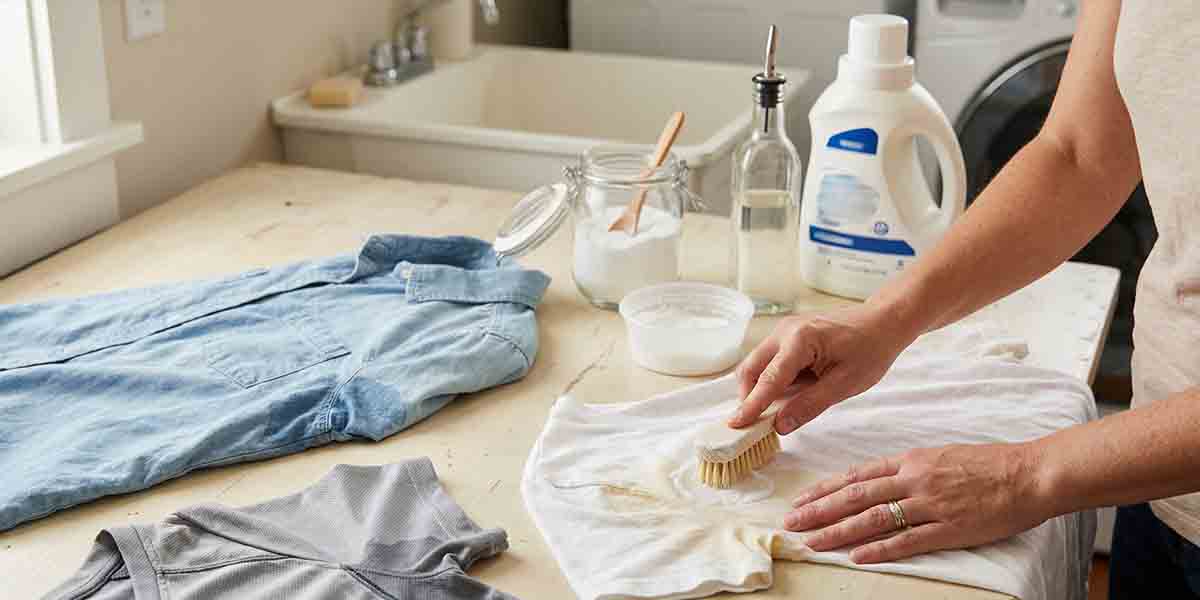
Mix one tablespoon of baking soda, one tablespoon of dish soap, and two tablespoons of hydrogen peroxide (3% solution, the kind sold in pharmacies) to make a thick paste. Apply it generously to the stained area and work it in gently with an old toothbrush. Leave it on for at least 30 minutes, then wash in the warmest water safe for that fabric. This method is very effective on white cotton but should be tested on a hidden area first for colored fabrics, as hydrogen peroxide can lighten some dyes.
Method 2: White Vinegar and Baking Soda
Pour undiluted white vinegar directly onto the stain and let it soak for five minutes. Then sprinkle baking soda on top and gently work it into the fabric. The fizzing reaction helps loosen the stain. Leave for 20 minutes, then rinse and wash as normal. This method is gentler and safer for colored fabrics.
Method 3: Aspirin Paste
Crush two uncoated aspirin tablets and mix them with half a cup of warm water to dissolve. Apply to the stain and leave for two to three hours. The salicylic acid in aspirin can break down the compounds causing the yellow discoloration. This works particularly well on older, set-in stains when used as a soak before washing.
Fresh Sweat Stains
Fresh stains are far easier to deal with than old ones. The golden rule is to act quickly: the longer a sweat stain sits, the more it bonds to fabric fibers.
- Rinse the stained area immediately in cold water. Hot water can set the stain, so always start with cold.
- Apply a small amount of liquid laundry detergent directly to the stain and work it in gently.
- Let it sit for 5 to 10 minutes, then rinse thoroughly.
- Wash as usual, checking that the stain is fully gone before putting the item in the dryer.
If you are not able to wash the item straight away, at least rinse and air it out. Letting sweat-soaked fabric dry without rinsing makes the stain much harder to remove later.
Stains on Delicate or Dark Fabrics
Silk, wool, and dark-colored fabrics need more careful handling. Hydrogen peroxide and other bleaching agents are generally not suitable for these materials.
For silk and wool:
Mix one teaspoon of white vinegar with one cup of cold water and dab gently onto the stain with a clean cloth. Work from the outer edge of the stain toward the center to avoid spreading it. Rinse with cold water and lay flat to dry. Avoid scrubbing, which can damage delicate fibers.
For dark fabrics:
White salt can help draw out the stain before it sets. Wet the stained area, then sprinkle table salt generously over it and let it absorb for a few hours before brushing off and washing. For established stains on dark fabrics, a small amount of enzyme-based detergent worked in gently before washing usually produces good results without affecting the color.
Sweat Stains on Athletic and Synthetic Fabrics
Synthetic fabrics like polyester and nylon used in sportswear are particularly prone to holding onto odors. Standard washing often does not fully remove the smell because the tightly woven synthetic fibers trap bacteria-containing residue.
- Soak activewear in cold water with half a cup of white vinegar for 30 minutes before washing.
- Use a sports-specific detergent or add an enzyme booster to your wash.
- Wash inside out on a cool cycle — hot water can degrade synthetic fibers and set odors.
- Air dry rather than tumble dry. High heat in dryers can bake odors into synthetic fabrics permanently.
Avoid using fabric softener on activewear. Softener coats synthetic fibers in a waxy residue that traps odor-causing bacteria and makes the problem worse over time.
Common Mistakes to Avoid
There are a few things people regularly do that make sweat stains and odors harder to deal with, not easier.
Using hot water on fresh stains
Hot water causes proteins in sweat to coagulate and bond more firmly to fabric, effectively setting the stain. Always start with cold water.
Drying stained clothes in the dryer
Never put a garment in the dryer until you are confident the stain is fully gone. Heat from the dryer permanently sets stains, making them nearly impossible to remove afterward. Check stained items in natural light before drying.
Waiting too long to treat stains
Every hour a sweat stain sits untreated, it becomes harder to remove. If you cannot wash the garment right away, at minimum rinse the stained area with cold water and let it air out.
Over-applying antiperspirant
More is not better with antiperspirant. Applying too much means more aluminum compound residue on your clothing, which leads to more stubborn staining over time. A thin, even layer is all you need — and make sure it is fully dry before putting on your shirt.
Prevention Is Easier Than Treatment
The most effective way to deal with sweat stains is to limit how badly they form in the first place. A few simple habits can make a meaningful difference:
- Wear an undershirt. A thin cotton undershirt acts as a barrier between your skin and your outer clothing, absorbing most of the sweat before it reaches your shirt or blouse.
- Let antiperspirant dry completely before dressing. Wet antiperspirant transfers directly to fabric and contributes to buildup.
- Wash clothes after every wear, even if they look clean. Sweat residue is not always visible, but it builds up over multiple wears.
- Consider switching to an aluminum-free deodorant if yellow staining is a persistent problem. The tradeoff is less sweat reduction, but the staining issue diminishes significantly.
- Turn dark clothing inside out before washing to protect the outer surface from friction and detergent buildup.
When Home Remedies Are Not Enough
Sometimes, despite your best efforts, a stain has been there too long or a garment is too delicate for home treatment. In these cases, a professional dry cleaner is your best option. Be upfront about the type of stain and how old it is — dry cleaners can tailor their approach based on this information and have access to treatments that are not available for home use.
Similarly, if body odor is a persistent concern despite good hygiene practices, it may be worth speaking with a dermatologist or doctor. Conditions like hyperhidrosis (excessive sweating) are treatable, and there are prescription-strength antiperspirants, medications, and even procedures that can help significantly.
Final Thoughts
Sweat is unavoidable, but the stains and odors that come with it do not have to be a permanent problem. Understanding what causes both — the interplay between sweat glands, bacteria, diet, and clothing materials — gives you the foundation to tackle the issue effectively. Whether you are dealing with a fresh stain after a workout, a stubborn yellow ring that has been building up for months, or a persistent odor in your favorite gym shirt, there is a solution that works.
The most important things to remember: act quickly on fresh stains, keep cold water as your first line of defense, and never put stained clothing in a hot dryer until the stain is fully gone. For odor, a combination of good hygiene habits, the right clothing choices, and the occasional vinegar or baking soda treatment will keep your wardrobe smelling clean and fresh.
With a little consistency, managing sweat stains and odors becomes less of a chore and more of a simple part of your regular routine.