Getting dressed for a job interview can feel like one of the most stressful parts of the whole process. You want to look put-together without looking overdressed, professional without appearing stiff, and confident without drawing attention away from your actual qualifications. It is a lot to think about before you have even written a single answer to a tough interview question.
The good news is that once you understand a few core principles, choosing the right interview outfit becomes much less complicated. This guide walks you through everything you need to know — from reading the company dress code before your interview, to picking the right shoes, colors, and accessories that work for your industry and body type.
Start with the Company Culture
Before you open your closet, do a little research. The outfit that works perfectly for a law firm interview could feel completely out of place at a tech startup — and vice versa. The goal is to dress one level above what employees typically wear to work. Not two levels, not the same level. One step above shows that you take the opportunity seriously without appearing like you misread the room.
Here are a few ways to gauge what to wear before your interview day:
- Browse the company website and look at team photos or ‘About Us’ pages
- Check their LinkedIn profiles and look at how employees dress in photos
- Look at the company’s social media — Instagram and Facebook often show candid workplace moments
- If you know anyone who works there or has interviewed there, ask them directly
- Pay attention to how the recruiter dresses when they first contact you in person or on video
Once you have a sense of the environment, you can make a more informed decision about how formal or casual your outfit should be.
The Classic Interview Outfit Formulas That Actually Work
1. The Tailored Pantsuit
A well-fitted pantsuit is one of the most reliable interview outfits you can wear. It works across almost every industry and signals that you are organized, serious, and ready to get things done. The key word here is fitted. A pantsuit that is too boxy or too loose can make you look like you borrowed it from someone else.
Stick to neutral colors like navy, charcoal gray, black, or deep burgundy. A crisp white or light blue blouse underneath keeps the look clean and professional. If the company culture is more creative, you can swap the plain blouse for one with subtle texture or a tasteful pattern.
Avoid pantsuits with loud prints or extremely bright colors for your first interview. You can show your personality through small accessories once you have a better sense of the company’s style.
2. The Blazer and Trousers Combination
If a full suit feels too formal for the company you are interviewing with, a blazer paired with tailored trousers gives you a polished look that is slightly more relaxed. This combination is especially popular for corporate roles at companies that have adopted business casual as their everyday dress code.
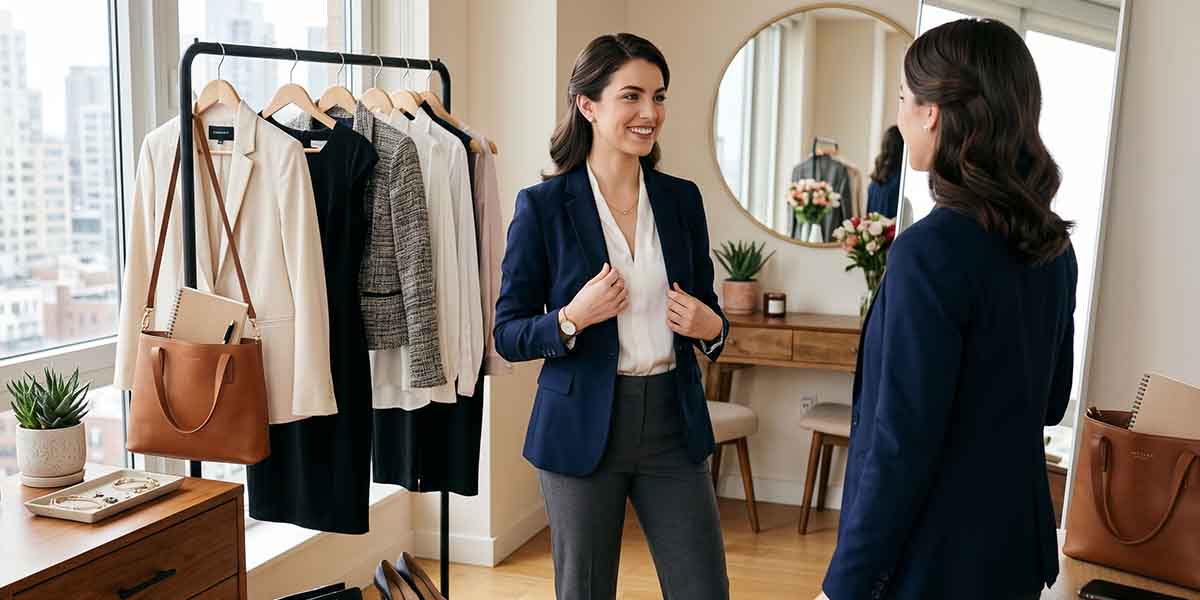
Matching your blazer and trousers in the same color family creates a cohesive, intentional look. Alternatively, a neutral blazer over dark trousers with a fitted top underneath is a combination that almost never goes wrong.
Make sure the trousers fit through the seat and thighs without pulling, and that the hem hits right at or just above the ankle. Trousers that are too long or too baggy can make even the most expensive outfit look sloppy.
| 😓 Facing This Problem? | ✅ Best Products from Amazon |
|---|---|
| Dark patches under arms? | Best Shirts That Hide Sweat |
| Excessive sweating? | Strongest Antiperspirants That Work |
| Sweat in formal meetings? | Breathable Formal Wear |
| Always sweating in summer? | Cooling Clothing You’ll Love |
| Shoes getting smelly? | Sweat-Resistant Shoes |
| Visible back sweat? | Undershirts That Actually Work |
3. The Pencil Skirt and Blouse
A pencil skirt paired with a well-fitted blouse is a timeless option that works particularly well in finance, law, marketing, and similar professional settings. The skirt should hit at or just below the knee — both for comfort and for the impression it gives.
Tuck your blouse in fully or choose a top that has a clean, finished hem when worn untucked. A half-tuck can look intentional in casual offices but tends to appear unfinished in more traditional environments.
Avoid skirts with bold slits that go higher than mid-thigh, or fabrics that cling tightly. Comfort matters a lot during an interview — if you are constantly adjusting your outfit, it will distract you from the conversation.
4. The Sheath Dress
A sheath dress is another excellent option that requires very little effort to style. It is clean, structured, and looks put together without appearing overly formal. Choose a dress in a solid color or a subtle pattern like fine stripes or a small geometric print.
Throw a blazer or structured cardigan over it if the office looks more traditional, or wear it alone if the environment is more contemporary. A sheath dress in a dark neutral is one of those pieces that adapts well to almost any professional setting.
Length matters here too. Aim for the hemline to sit at or just above the knee. Anything significantly shorter can become a distraction — both for you and for the interviewer.
5. The Midi Dress or Skirt
Midi-length options have become more mainstream in professional settings over the past few years. A midi skirt or dress that falls between the knee and ankle can look polished when styled correctly. Choose structured fabrics like ponte, crepe, or a smooth woven material rather than flowing chiffon or jersey.
Pair a midi skirt with a fitted blouse or a tucked-in sweater, and a blazer if the environment is more formal. Midi dresses work beautifully with a blazer layered on top and block-heeled shoes or loafers.
Color Choices That Send the Right Message
Color psychology is real, and in an interview setting, it is worth thinking about even briefly. You do not need to overthink it, but a few general principles can help:
Navy Blue
Navy is one of the strongest interview colors. It reads as trustworthy, calm, and competent. It is professional without feeling as stark as black and works beautifully on a wide range of skin tones.
Charcoal or Medium Gray
Gray signals neutrality, which is actually a positive thing in an interview. It suggests that you are analytical and composed. Charcoal gray is especially effective for corporate and finance roles.
Black
Black never goes wrong, but it can sometimes feel a little cold or unapproachable depending on the setting. Break it up with a softer top or add a touch of color through a scarf, blouse, or jewelry.
Soft White, Cream, or Light Blue
These work beautifully as accent colors — for a blouse, top, or inner layer. They are clean and friendly without being distracting.
Muted Tones Like Burgundy, Forest Green, or Dusty Rose
These can absolutely work in an interview, especially at creative companies or in fields like education, healthcare, or hospitality. Keep the rest of your outfit neutral and let the color be the one statement.
Colors to Use with Caution
Bright orange, neon yellow, bright red, and very bold patterns are best avoided for a first interview. They tend to draw more attention than intended and can accidentally overshadow your words and ideas.
Shoes That Complete the Look
Your shoes matter more than most people realize. Worn-down heels, scuffed leather, or shoes that you clearly cannot walk comfortably in will undermine an otherwise polished outfit. Here is what generally works well:
Classic Pumps
A closed-toe pump with a modest heel — somewhere between two and three inches — is the traditional interview shoe for a reason. It works with skirts, dresses, and trousers. Stick to neutral colors like black, nude, navy, or tan.
Block Heels
Block heels offer more stability and comfort than stilettos and still look completely professional. They work especially well with midi skirts, tailored trousers, or sheath dresses. A stacked block heel in black or camel is incredibly versatile.
Pointed-Toe Flats or Ballet Flats
Flats are absolutely appropriate for interviews, especially in companies with a casual or business casual culture. A pointed-toe flat in leather or faux leather looks sleek and intentional. Avoid athletic flats or flats with excessive embellishment.
Loafers
Loafers have moved firmly into professional territory over the past several years. A leather or faux leather loafer in black, tan, or even a rich tortoiseshell pattern can look very sharp with tailored trousers or a midi skirt.
What to Avoid
- Open-toe sandals or flip flops (unless the dress code is extremely casual)
- Very high platform shoes that affect how you walk
- Shoes with worn-down heels or visible scuffs
- Shoes that you have never worn before and are not yet broken in — blisters are the last thing you need on interview day
Accessories: Less Is More
Accessories are where a lot of people either nail it or overdo it. For an interview, the principle is simple: your accessories should complement your outfit without stealing the show.
Jewelry
A simple pair of stud earrings, small hoops, or understated drop earrings work well. A delicate necklace or a classic watch adds polish without distraction. Save the statement necklaces and multiple bangles for after you land the job.
Bag or Briefcase
Your bag is part of your outfit. A structured tote, a simple leather or faux leather shoulder bag, or a small briefcase all send the right message. Make sure the bag is clean, not overstuffed, and functional enough to carry your resume copies and anything else you need.
Avoid very casual bags like canvas totes with logos, oversized hobo bags that look unstructured, or bags that are visibly worn.
Scarves and Belts
A simple silk scarf worn around the neck or tied on a bag handle can add a nice finishing touch. A slim belt over a blazer or tucked into trousers can define your waist and add structure. Keep both simple and in neutral or complementary tones.
What to Wear for Specific Industries
Corporate Finance, Law, and Banking
These industries tend to be the most traditional when it comes to dress codes. A tailored pantsuit or blazer and trouser combination in navy, charcoal, or black is almost always the right choice. Stick to conservative shoes and minimal jewelry. Your outfit should communicate that you understand and respect the culture.
Tech and Startups
Most tech companies operate in a business casual environment, and many startups skew even more casual than that. A well-fitted blazer over dark jeans is completely appropriate for many tech interviews. You can also go for a clean pair of tailored trousers with a smart blouse and skip the blazer entirely. The goal is to look like you made an effort without appearing as though you dressed for a different decade.
Healthcare and Education
These fields appreciate a neat, professional appearance that is not intimidating. Business casual works well — a midi skirt with a blouse, a sheath dress, or tailored trousers with a cardigan. Avoid very formal looks that might feel unapproachable, especially if the role involves working directly with patients or students.
Creative Fields — Design, Media, Marketing, Fashion
Creative industries give you a bit more room to express your personal style. That said, the key is to look intentional, not casual. A bold blazer in a statement color, stylish trousers with an interesting cut, or a dress with a fun print can all work beautifully. The difference is that everything should look deliberate and well put together — not like you just grabbed whatever was clean.
Retail and Hospitality
For customer-facing roles in retail or hospitality, a clean, put-together business casual look works well. Neat trousers or a skirt with a polished blouse and comfortable shoes are a good starting point. If you know the company has a uniform, ask ahead of time whether you should dress in their style palette.
Practical Tips for Interview Day
Even the best outfit can fall apart with poor preparation. Here are a few practical things that are easy to overlook:
- Wear your outfit for a test run at home at least a day before. Sit down in it, walk across the room, check how it looks from behind. Wrinkles, loose buttons, and ill-fitting waistbands are much easier to fix the night before than the morning of.
- Iron or steam your clothes the night before. Even fabrics advertised as wrinkle-resistant benefit from a quick once-over.
- Check for lint, pet hair, or stray threads. Keep a lint roller handy.
- Make sure everything is clean and smells fresh. This seems obvious, but it is worth a reminder.
- Keep fragrance light or skip it entirely. Some people are sensitive to scent, and you do not want anything to be a distraction.
- Have your bag packed and ready the night before so you are not scrambling at the last minute.
- Wear comfortable shoes or bring a change of shoes if you are commuting a long distance on foot.
Building a Go-To Interview Wardrobe
If you find yourself interviewing regularly or want to be prepared for opportunities that come up quickly, having a small collection of versatile pieces makes life much easier. You do not need a huge wardrobe — just a handful of items that work well together.
A solid interview wardrobe might include:
- One well-fitted blazer in a neutral color — navy, black, or charcoal
- Two pairs of tailored trousers — one in a dark neutral, one in a second neutral like gray or camel
- Two or three blouses or tops that work under a blazer or stand alone
- One sheath dress or pencil skirt in a solid color
- One pair of professional-looking closed-toe shoes — pumps, block heels, or loafers
- A structured bag that is large enough for documents
With these basics, you can mix and match to create multiple interview-appropriate outfits without ever feeling like you are wearing the same thing twice.
A Final Word on Confidence
At the end of the day, the best interview outfit is one that makes you feel confident. If you feel good in what you are wearing, that energy comes through. You stand taller, speak more clearly, and focus on the conversation rather than tugging at your collar or worrying about whether your skirt is sitting right.
Choose clothes that fit well, that you have worn before, and that feel like a version of you — just a slightly more polished version. Your outfit is the first impression you make before you say a single word. Make it count, and then let your skills and personality do the rest of the talking.