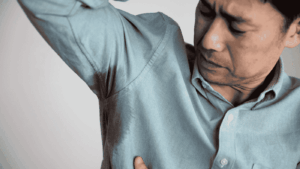

Sweating is something every human body does, and for the most part, nobody gives it a second thought. It keeps us cool, it responds to stress and exercise, and it is a completely normal part of being alive. But for a lot of people — far more than you might expect — underarm sweating crosses a line from ordinary into disruptive. Shirts soaked through before the morning commute is over. Embarrassing wet patches during important meetings. Deodorant that simply cannot keep up no matter how much product is applied.
This is where sweat pads and underarm shields come in. They are not a new idea, and they are not complicated. They sit inside your clothing, between your skin and the fabric, and they absorb perspiration before it can cause a visible problem. No chemicals, no prescriptions, no appointments. Just a practical solution that millions of people around the world quietly rely on every single day.
If you have ever wondered what these products actually are, how they work, whether they are right for you, and how to choose the best option, this guide covers all of it in plain language.
What Exactly Are Sweat Pads and Underarm Shields?
At the most basic level, a sweat pad is an absorbent layer designed to sit in the underarm area and capture moisture before it soaks into clothing. The terms sweat pad, armpit pad, dress shield, and underarm shield are all used to describe variations of the same concept, though there are some subtle differences between them.
Sweat pads typically refer to modern, disposable or reusable products sold in packs, usually with an adhesive backing that attaches either to the inside of a garment or directly to the skin. Underarm shields is the older term, historically referring to fabric-based guards sewn or pinned into clothing to protect the material from perspiration staining. Today the two terms overlap heavily and most people use them interchangeably.
What they all share is a simple function: create a physical barrier between the body and the clothing so that sweat is absorbed and contained before it can leave its mark — visually, structurally, or otherwise.
| 😓 Facing This Problem? | ✅ Best Products from Amazon |
|---|---|
| Dark patches under arms? | Best Shirts That Hide Sweat |
| Excessive sweating? | Strongest Antiperspirants That Work |
| Sweat in formal meetings? | Breathable Formal Wear |
| Always sweating in summer? | Cooling Clothing You’ll Love |
| Shoes getting smelly? | Sweat-Resistant Shoes |
| Visible back sweat? | Undershirts That Actually Work |
A Bit of History
Dress shields go back well over a hundred years. Women in the Victorian era routinely wore them inside corsets and formal dresses to protect expensive fabrics from perspiration damage — garments in that era were not the kind of thing you could simply throw in a washing machine, and sweat staining could ruin them permanently. The materials of the day were usually wool felt, silk, or rubber-backed cotton, none of which were particularly comfortable, but they worked.
As antiperspirants became widely available during the early 20th century, dress shields gradually fell out of everyday use for the general public. But they never fully went away. Tailors continued incorporating them into high-end suits and formalwear. Stage performers and public speakers kept using them as an essential backstage staple. And people dealing with excessive sweating never stopped needing them.
What changed most dramatically in recent years is the quality of the materials. Today’s products draw from decades of development in medical and hygiene industries, resulting in pads that are thinner, more absorbent, better at controlling odor, gentler on skin, and far more discreet under clothing than anything available in previous generations.
Types of Sweat Pads and Underarm Shields
The market has diversified considerably, and there are now several distinct categories to choose from depending on your lifestyle, sweating level, and personal preferences.
Disposable Adhesive Pads
These are the most widely sold type and the easiest to find in pharmacies, supermarkets, and online stores. Each pad is designed for single use. It has a peel-and-stick backing on one side and an absorbent core on the other. You apply it, wear it through the day, and dispose of it in the evening.
Some disposable pads are designed to stick to the inside of the garment — attaching to the fabric lining so they protect the shirt directly. Others use a skin-safe adhesive and attach to the underarm area itself, moving with your body and covering the skin rather than the garment. Both approaches have their fans; the choice usually comes down to personal preference and the type of clothing being worn.
The absorbent core in most disposable pads contains a superabsorbent polymer material, the same class of ingredient used in premium hygiene products, capable of absorbing many times its own weight in liquid. Better-quality pads also incorporate odor-neutralizing agents such as baking soda or activated charcoal.
Reusable Fabric Shields
Reusable shields are made from multiple layers of fabric — usually a soft inner face made from cotton or bamboo, a waterproof or moisture-barrier middle layer, and a cotton or polyester outer layer. They attach to garments via small wings that snap over a shoulder seam, sewn-in loops, or simple pinning.
After each use they are washed — either by hand or on a gentle machine cycle — and then air dried. A well-made pair of reusable shields can last a year or longer with regular care. Over time they are considerably more economical than disposables and generate far less waste, making them the more sustainable option for anyone using underarm protection on a regular basis.
Sewn-In Dress Shields
For garments that are worn frequently and are difficult to clean — tailored suits, performance costumes, ceremonial clothing — some people prefer shields that are permanently or semi-permanently stitched into the underarm seam. These can be removed for washing separately from the garment itself. Seamstresses and tailors have been doing this for generations, and it remains a practical choice for anyone who needs reliable, long-term protection in specific pieces of clothing.
Undershirts with Built-In Absorbent Panels
A relatively recent development in this space is the underarm-protection undershirt — a regular-looking undershirt with extra-absorbent panels sewn directly into the underarm areas. Worn under a dress shirt or blouse, they provide full coverage without requiring any additional products. The absorbent panels do lose some of their effectiveness after many wash cycles, but most products of this type hold up well for six months to a year of regular use.
Who Uses Them, and Why
People reach for sweat pads for all kinds of reasons, and the product spectrum covers everything from occasional use to daily necessity.
People Managing Hyperhidrosis
Hyperhidrosis is a medical condition defined by sweating that goes significantly beyond what the body needs for temperature regulation. It affects somewhere between two and five percent of the population, though many researchers believe the actual figure is higher because a large proportion of sufferers never seek medical attention. For these individuals, underarm sweating can be severe enough to soak through multiple layers of clothing within minutes of getting dressed. Sweat pads are often a daily essential, used alongside other treatments rather than as a standalone solution.
Professionals and Anyone with High-Stakes Appearances
Job interviews. Sales presentations. Court appearances. Wedding days. These are moments when visible sweat stains feel particularly crushing, and when the anxiety of worrying about them can actually make the sweating worse. Sweat pads take that variable off the table, letting people concentrate on what matters rather than monitoring their shirts.
People in Hot or Humid Climates
When the ambient temperature and humidity are both working against you, ordinary deodorant is rarely enough to get through a full day without visible consequences. Sweat pads absorb what deodorant cannot handle and keep clothing presentable through long stretches in challenging conditions.
Women Going Through Hormonal Changes
Pregnancy, postpartum recovery, perimenopause, and menopause all commonly bring significant increases in perspiration. Women who never had issues with underarm sweating before can find themselves dealing with it quite suddenly during these transitions. Sweat pads offer a straightforward, immediate response that does not require waiting for hormone levels to stabilize.
Travelers and Frequent Commuters
Long-haul flights, packed subway cars, layovers in airports with no time to freshen up — travel puts people in situations where they cannot control their environment and cannot easily change their clothing. A small supply of disposable pads in a travel bag is a simple way to maintain personal confidence across a long journey.
What Makes a Good Sweat Pad: Materials and Construction
Not all sweat pads are created equal. Understanding what goes into the construction of a well-made product helps you identify quality when you are shopping.
The Absorbent Core
This is the most important layer. In disposable pads, the core typically contains one of two types of material: cellulose fiber, which is breathable and feels natural but has a moderate absorption limit, or superabsorbent polymer crystals, which lock in far more moisture but can feel slightly less natural against or near the skin. Premium pads often combine both — cellulose on the skin-facing side for comfort, SAP in the middle for maximum capacity.
Odor Control
Underarm odor comes from bacteria breaking down the proteins and fatty acids present in sweat — perspiration itself is nearly odorless when it leaves the body. The most effective sweat pads address this directly. Look for products containing baking soda, activated charcoal, or antibacterial agents in the absorbent layer. These ingredients either slow bacterial growth or neutralize the odor compounds already formed, making a meaningful difference over the course of a day.
The Backing and Adhesive
For skin-facing pads, the contact layer should be soft, non-irritating, and free from latex and fragrances that could cause reactions. The adhesive should hold firmly through movement and humidity without leaving residue on skin or fabric. Medical-grade acrylic adhesives are the industry standard for quality pads. For garment-facing pads, the outer backing should be a thin, non-woven material that lies flat under clothing without creating visible texture through fabric.
Thickness and Profile
Thin profiles matter more than people often initially assume. A thick, bulky pad creates an obvious shape under a fitted shirt or blouse. The best products are designed to be nearly invisible under clothing — flat enough that no one would notice them even through a tucked-in dress shirt. If a product does not advertise its slim profile specifically, check reviews to see whether visibility has been reported as an issue.
How to Choose the Right Product for You
With the range of options available, a few key questions will help narrow the field quickly.
How Heavy Is Your Sweating?
Light to moderate sweaters will get perfectly adequate results from a standard disposable pad. If you soak through shirts on a regular basis or deal with hyperhidrosis, you need a higher-capacity product — look for pads labeled extra-absorbent or those marketed specifically for heavy sweating. Thick, multi-layer reusable shields can also provide excellent coverage for severe sweating.
What Kind of Clothing Do You Wear?
Light-colored shirts and blouses benefit most from garment-side adhesive pads, since those protect the fabric directly. Formal suits and tailored jackets are better served by sewn-in shields or clip-on reusable shields that do not require adhesive at all. Dark, casual clothing where staining is less of a concern makes skin-side pads a reasonable choice, as they tend to feel more natural during wear.
Do You Have Sensitive Skin?
Anyone prone to contact dermatitis, rashes, or skin reactions should look for fragrance-free, hypoallergenic products and test on a small area before committing to full-day use. The safest option for very sensitive skin is a garment-side pad that never touches the skin at all, or a reusable fabric shield with a 100 percent cotton contact layer.
How Often Do You Need Protection?
For daily, year-round use, reusable shields make more sense financially and environmentally — the cost per use drops dramatically compared to disposables. For occasional use, a travel situation, or just testing the waters before committing to a product type, a small pack of disposables is the obvious starting point.
How to Use Sweat Pads Correctly
Applying and wearing these products properly makes a significant difference in how well they perform. Several practical steps are worth following.
- Start dry. Always apply sweat pads after bathing, once your skin is completely dry. Adhesion drops noticeably if there is any residual moisture, and the pad will start absorbing immediately rather than building up capacity for when you need it.
- Position it right. Center the pad in the hollow of the armpit. Too far toward the chest or too far toward the back reduces coverage and increases the chance of visible shifting under clothing. Take a moment to look in a mirror after applying to confirm placement before getting dressed.
- Press firmly. Spend five to ten seconds pressing the pad against the skin or fabric, including along all edges. This is particularly important in the corners, where lifting tends to start first.
- Combine with antiperspirant if needed. Antiperspirant and sweat pads work well together. The antiperspirant reduces the volume of sweat produced, and the pad handles whatever still comes through. Apply antiperspirant first, let it dry completely, and then attach the pad.
- Replace before saturation. A fully saturated pad provides no protection and creates an uncomfortable damp sensation. For heavy sweaters, changing pads at midday during long days is a straightforward habit that makes a big difference.
- Wash reusables properly. Hand washing in cool water with mild detergent after each use is ideal for most reusable shields. Machine washing on a gentle cycle is generally acceptable but accelerates wear on the waterproof layer. Avoid fabric softener — it coats the fibers and reduces absorbency over time. Always air dry; tumble drying degrades the waterproof barrier.
Common Questions
Will other people be able to tell I am wearing them?
Under normal clothing, no. Well-made pads with a slim profile are not detectable under a standard dress shirt, blouse, or T-shirt. The main scenario where visibility becomes possible is a very tight, light-colored shirt worn without an undershirt — in that situation, some texture might show through the fabric. Wearing a thin undershirt layer eliminates this entirely. If invisibility is a priority, look for pads specifically described as ultra-thin and check whether other buyers mention visibility in reviews.
Can I wear sweat pads with antiperspirant?
Yes, and for most people dealing with moderate to heavy sweating, this combination gives the best results. Antiperspirant applied the night before works better than morning application because it has time to penetrate the sweat ducts without being washed away. Using it alongside sweat pads provides both a reduction in output and reliable capture of whatever does come through.
Are they safe for sensitive or reactive skin?
Most products on the market are designed with skin safety in mind, using hypoallergenic materials and medical-grade adhesives. That said, reactions do occasionally occur, especially in people with latex sensitivities, eczema, or known reactions to adhesive bandages. Testing on a less sensitive area of skin first is sensible. Garment-side pads and reusable fabric shields — which do not contact the skin directly — are the safest choice for anyone with a history of adhesive-related skin reactions.
Do they help with odor as well as moisture?
They help with both, though the extent depends on the specific product. Absorbent pads that capture sweat before it reaches warm fabric reduce the conditions in which odor-causing bacteria thrive. Products with baking soda, activated charcoal, or antibacterial elements in the core go a step further by directly addressing bacterial activity and odor compounds. Standard pads without these additions manage moisture well but do not contribute as much to odor control.
What about night sweats?
Some people use sweat pads in sleepwear to manage nighttime perspiration and protect bedding. The main limitation is that adhesive pads can shift during sleep when you move around. Purpose-made sleepwear with built-in absorbent panels tends to be more practical for this particular use case, since the panels do not move independently of the garment.
Sweat Pads Compared with Other Options
It is worth understanding how sweat pads fit into the broader landscape of underarm sweat management, since many people use them alongside other approaches rather than relying on them exclusively.
- Standard deodorant: Addresses odor through fragrance and antimicrobial ingredients but does nothing to reduce moisture volume. Not adequate on its own for moderate to heavy sweaters.
- Antiperspirant: Uses aluminum-based compounds to temporarily block sweat ducts, reducing the volume of perspiration produced. Effective for many people but causes irritation in some users, and does not provide complete protection in severe cases.
- Clinical-strength antiperspirant: A higher concentration of aluminum chloride, available without prescription. Noticeably more effective than standard antiperspirant but also more likely to cause skin irritation, particularly when first starting use.
- Prescription antiperspirant: The highest concentration antiperspirant formulas, requiring a doctor’s prescription. Intended for hyperhidrosis specifically and can be significantly more effective than over-the-counter options, though skin irritation remains a common side effect.
- Botox injections: Injecting botulinum toxin into the underarm temporarily blocks the nerve signals that trigger sweating. Results last roughly four to twelve months. Highly effective but expensive, requires a medical provider, and must be repeated regularly to maintain results.
- miraDry: A non-invasive in-office procedure that uses microwave energy to permanently destroy sweat and odor glands in the underarm area. Very effective and long-lasting, but costly and irreversible. Considered appropriate mainly for people with significant hyperhidrosis who have not found adequate relief through other methods.
- Surgery: In rare, severe cases of hyperhidrosis that have not responded to other treatments, surgical options including endoscopic thoracic sympathectomy exist. These are considered last-resort measures due to the risk profile and irreversible nature of the procedure.
Sweat pads occupy a distinct and useful position in this list. They are immediately effective, carry no health risks, require no medical involvement, and cost almost nothing compared to most other options. They do not reduce how much you sweat — they simply manage where the sweat ends up. For many people that is exactly what they need. For others they are the practical daily complement to a medical treatment that handles the underlying condition.
Environmental and Cost Considerations
Disposable sweat pads generate real waste. Someone using two pads a day produces more than seven hundred discarded pads per year. While some manufacturers have moved toward biodegradable or compostable materials, the majority of disposable pads currently on the market are not biodegradable and end up in landfill.
Reusable shields address this problem directly. A single pair of quality reusable shields used daily replaces hundreds of disposables over the course of a year. The financial comparison is equally compelling. A pack of twenty disposable pads costs roughly the same as a pair of reusable shields that will last for three hundred or more uses. Over a full year, the savings are substantial.
There is also a secondary financial argument for using sweat pads that often goes unmentioned: clothing protection. Underarm sweat staining — the yellowish discoloration caused by antiperspirant residue reacting with sweat over time — is one of the most common reasons people discard otherwise intact shirts and blouses. Sweat pads prevent this damage entirely, extending the working life of clothing significantly. For anyone who invests in quality dress shirts, suits, or workwear, this alone can more than offset the cost of the product.
Practical Tips for Better Results
A few habits and choices outside the pad itself can noticeably improve overall effectiveness.
- Choose breathable fabrics. Natural fibers like cotton, linen, and bamboo breathe better than synthetics like polyester, which trap heat against the body and increase sweating. Dressing in breathable materials reduces the workload on your pads and keeps you more comfortable throughout the day.
- Apply antiperspirant the night before. Most people apply antiperspirant in the morning and assume that is the best approach. In fact, antiperspirant absorbs into the sweat ducts most effectively when applied at night to completely dry skin, while sweating is minimal. Morning showers do not fully wash it away, and the active ingredients have time to work before the next sweating episode begins.
- Keep spares accessible. For people with heavy sweating, carrying two or three disposable pads in a bag or desk drawer allows a midday change before an afternoon meeting or event. The difference between a pad applied fresh in the morning and one changed at lunchtime can be significant on a demanding day.
- Stay hydrated. It sounds counterintuitive, but adequate hydration actually supports more efficient body temperature regulation, which can reduce the total volume of sweating over the course of a day. Dehydration forces the body to work harder to maintain temperature, often resulting in more perspiration overall.
- Manage dietary triggers. Spicy food, caffeine, and alcohol are well-documented triggers that increase both sweating volume and the odor intensity of perspiration. Timing consumption of these around important occasions — rather than eliminating them entirely — is a practical adjustment that can make a noticeable difference.
- Let antiperspirant dry before applying a pad. If you use a skin-side adhesive pad in combination with antiperspirant, always wait until the antiperspirant is fully dry before sticking the pad in place. Applying over a damp surface reduces adhesion and risks the pad shifting or detaching during the day.
A Note on Hyperhidrosis and When to See a Doctor
Most people who use sweat pads are managing ordinary sweating that is heavier than average but not a clinical condition. But for some people, the level of underarm sweating they experience represents a recognized medical condition called primary focal hyperhidrosis, and it deserves proper attention rather than simply being managed in silence with over-the-counter products.
Signs that your sweating might warrant a medical conversation include: soaking through multiple layers of clothing several times a day regardless of temperature or activity level; sweating that affects your willingness to socialize or pursue activities you would otherwise enjoy; sweating episodes that wake you from sleep; or sweating that is accompanied by other symptoms such as unexplained weight loss, fever, or a recent significant change in the pattern or severity of the sweating.
A doctor can help determine whether the sweating is primary — meaning it has no underlying medical cause — or secondary to another condition, and can walk through the full range of treatment options available. Sweat pads work well as part of a management plan, but they are most effective when used with the full picture in mind.
Closing Thoughts
Sweat pads and underarm shields do not get much cultural airtime. They are the kind of product people tend to discover quietly, through a discreet online search or a recommendation from someone they trust, and then simply start using without making much of it. There is something refreshingly no-nonsense about that — these products exist to solve a real problem, and they do it effectively without any particular fuss.
The range of available options today means there is genuinely something for every situation. Light sweaters protecting a favorite shirt can use a thin disposable pad once in a while. People dealing with hyperhidrosis every day can build a routine around high-capacity reusable shields. Travelers keep a few disposables in their bags. Performers sew shields into the garments they wear on stage. The product adapts to the need rather than demanding that you adapt to it.
If underarm sweating has been affecting your clothing, your confidence, or simply your comfort level going about your day, sweat pads are worth a serious look. The investment is low, the learning curve is minimal, and for most people the results are immediate. Start with a small pack of disposables to find out which style and brand works best for your body and clothing, then make a decision from there about whether to transition to a reusable option for the long term.
Confidence should not be something you have to think about. With the right product in place, it does not have to be.
Disclaimer: This article is intended for general informational purposes only and does not constitute medical advice. If you experience excessive sweating that interferes with daily life, please consult a qualified healthcare professional. Hyperhidrosis is a recognized, treatable medical condition and a doctor can help identify the most appropriate course of action for your individual situation.